




MASTERING TRAVEL TIME
Elegant and technically sophisticated, the Oyster Perpetual Sky-Dweller was designed for those continually travelling the globe. Featuring the Saros annual calendar and Ring Command system, it simultaneously indicates two time zones, as well as the date and month, and allows them to be adjusted with one simple gesture.
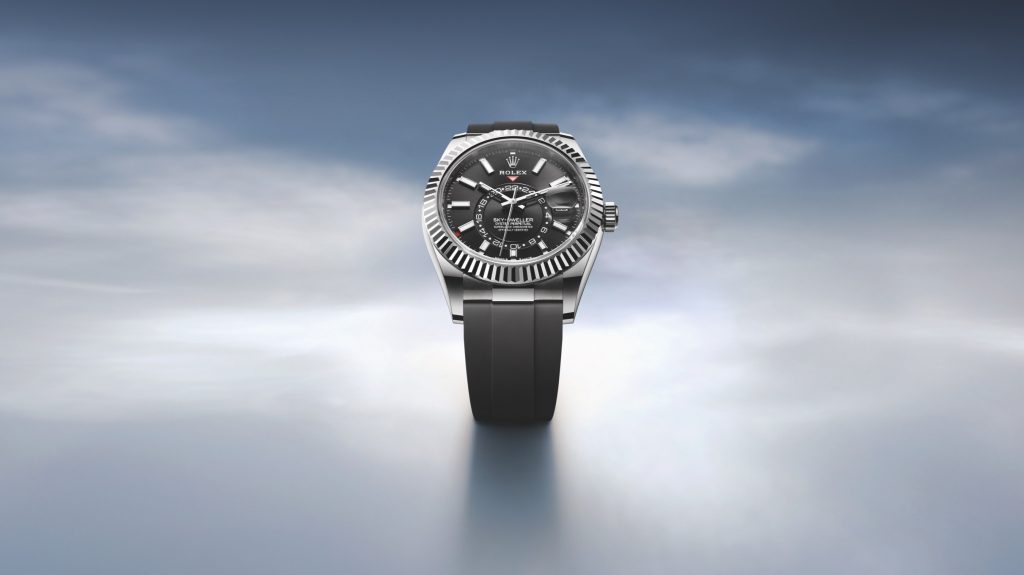
Since its creation in 2012, the Sky-Dweller has been aimed at those who see the world as a single territory, without borders. It allows travellers to avoid the pitfalls of time differences and always stay one step ahead.
SECOND TIME ZONE AT A GLANCE
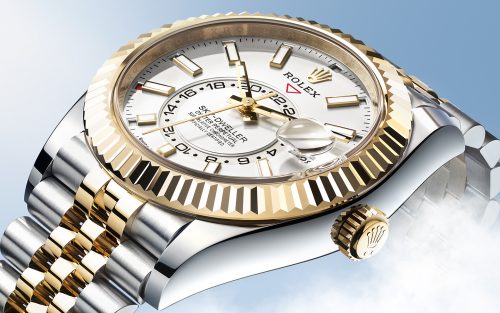
The Sky-Dweller simultaneously displays the time in a second time zone as well as the local time, which is indicated by central hands. This second time zone – or reference time – is indicated by a highly legible, small triangle with a red silhouette on a 24-hour graduated rotating disc. A signature element of the model, this off-centre disc makes it possible to unequivocally distinguish between daytime and night-time hours: an invaluable asset for someone travelling to the other side of the world.
INNOVATIVE AND INTUITIVE ANNUAL CALENDAR
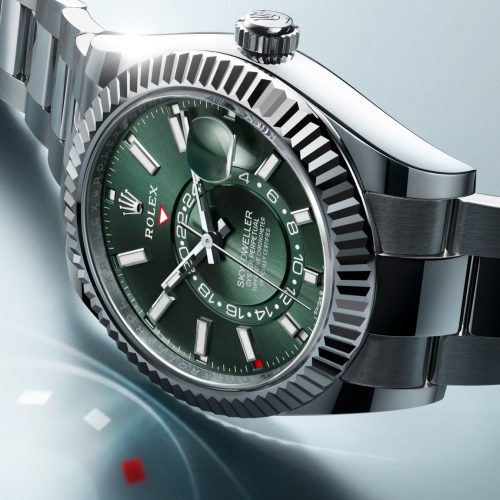
Specially developed for the Sky-Dweller, the patented Saros annual calendar is a key element in the model’s identity. The name of this mechanism, with its innovative design, is inspired by the Greek term denoting the cycle of lunar and solar eclipses.
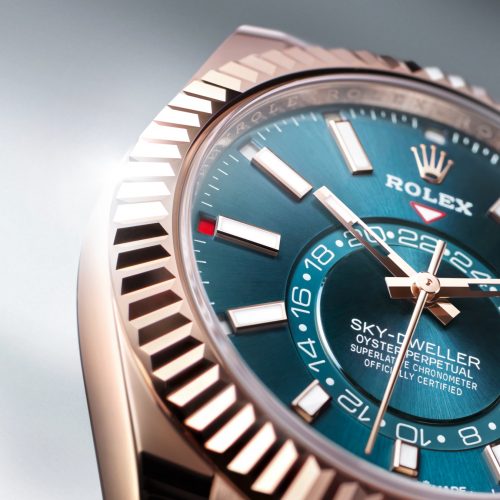
The Saros calendar automatically differentiates between 30-day and 31-day months. It therefore requires only one manual date adjustment a year, when February turns to March. It is intuitive and simple to read. The current month is indicated in red in one of the dozen windows that punctuate the hour markers around the circumference of the dial.
The watchmaking innovation relies on two-gear ratios and only four-gear wheels added to Rolex’s instantaneous date calendar. This elementary structure gives the Saros annual calendar excellent reliability.
RING COMMAND SYSTEM: TIME UNDER CONTROL
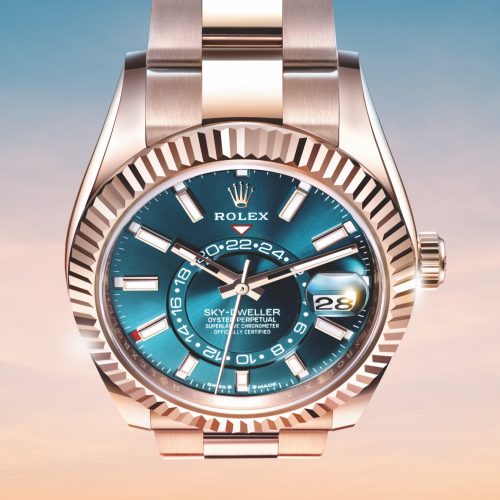
Developed by Rolex, the patented Ring Command system is an innovative mechanism of interaction between the rotatable bezel, winding crown and movement. It allows the Sky-Dweller’s different functions to be selected easily, quickly and securely, before adjusting them with the winding crown.
By turning the fluted bezel counterclockwise – the profile of which is accentuated to make it easier to handle – the wearer chooses the indication that they wish to set. First notch: date and month. Second notch: local time. Third notch: reference time.

FOR THE TRUE GLOBETROTTER
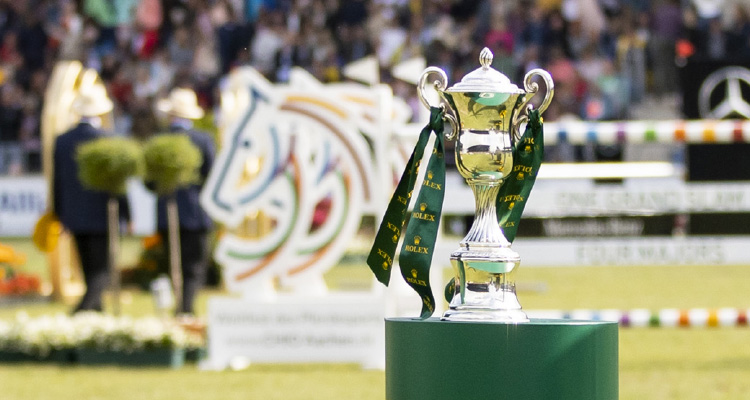
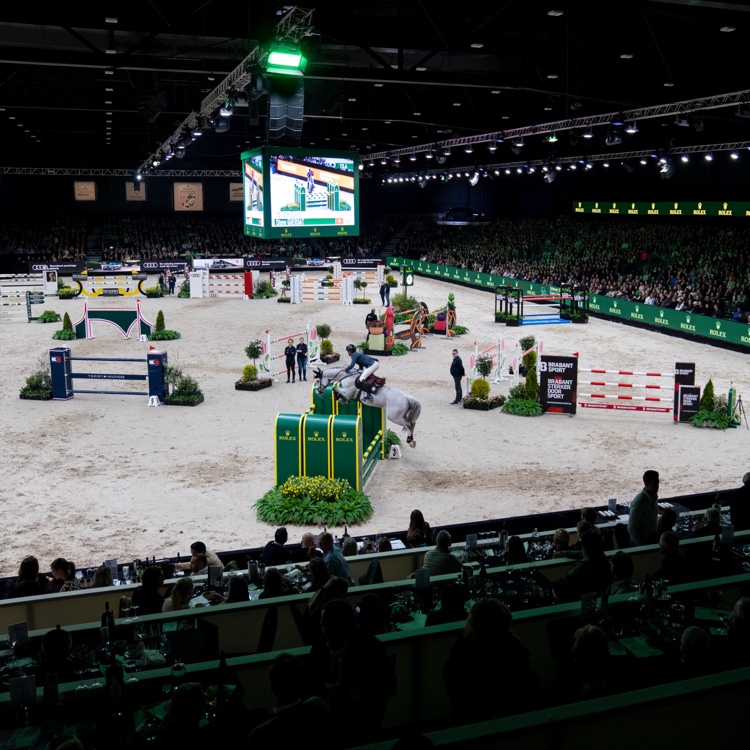
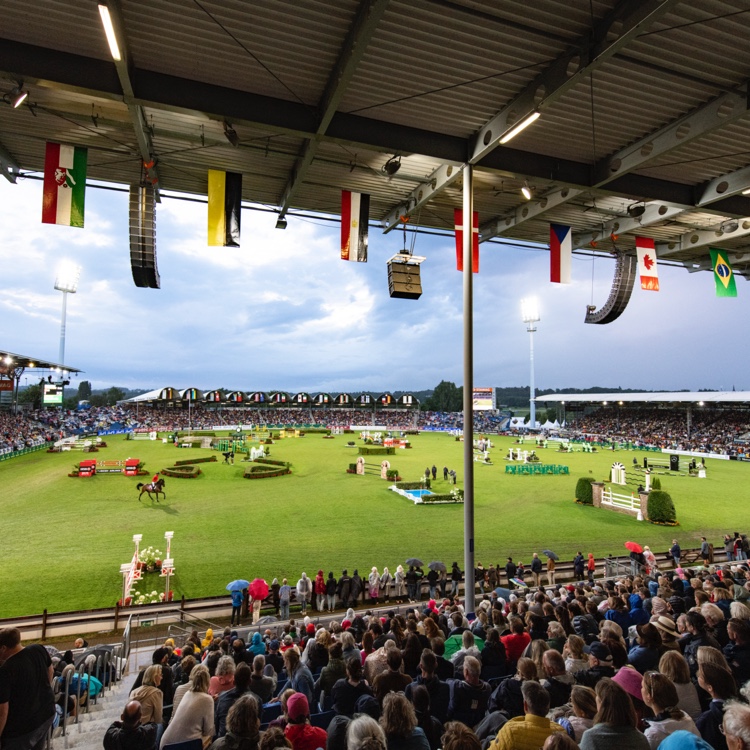
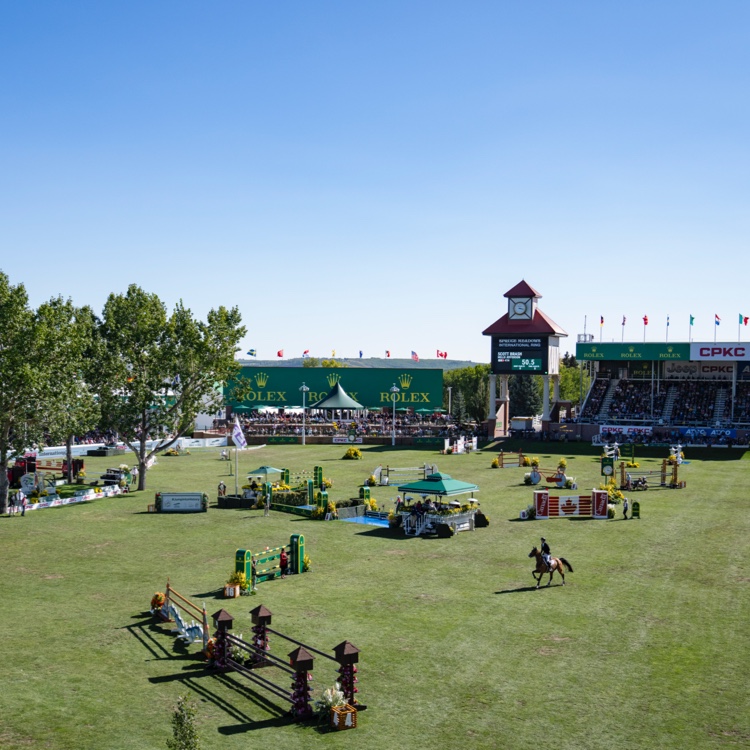
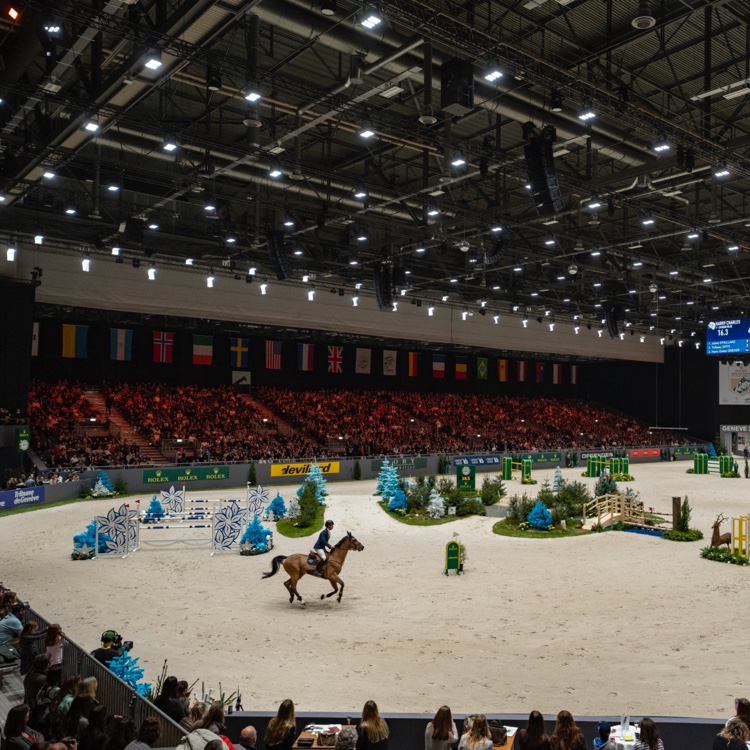
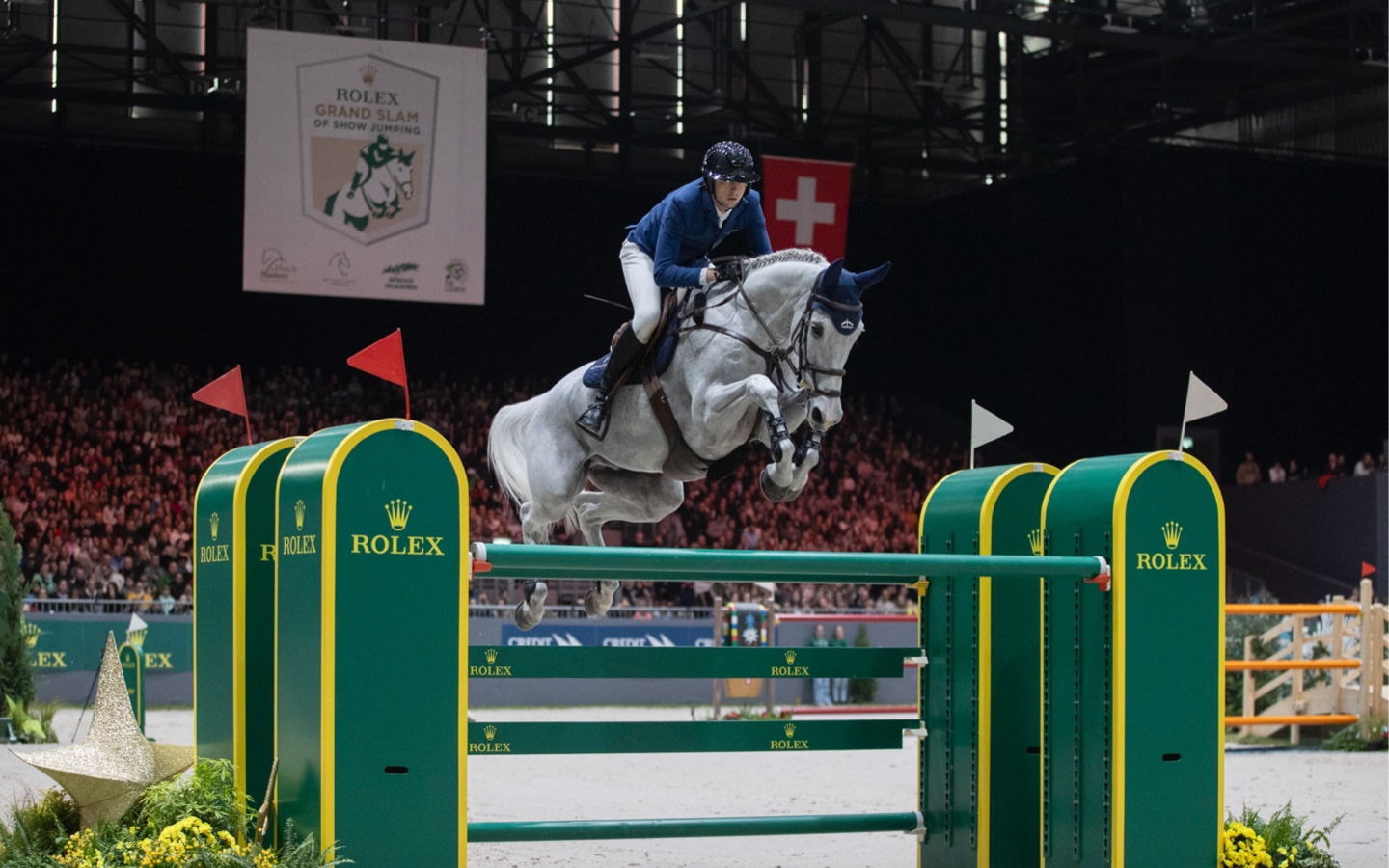
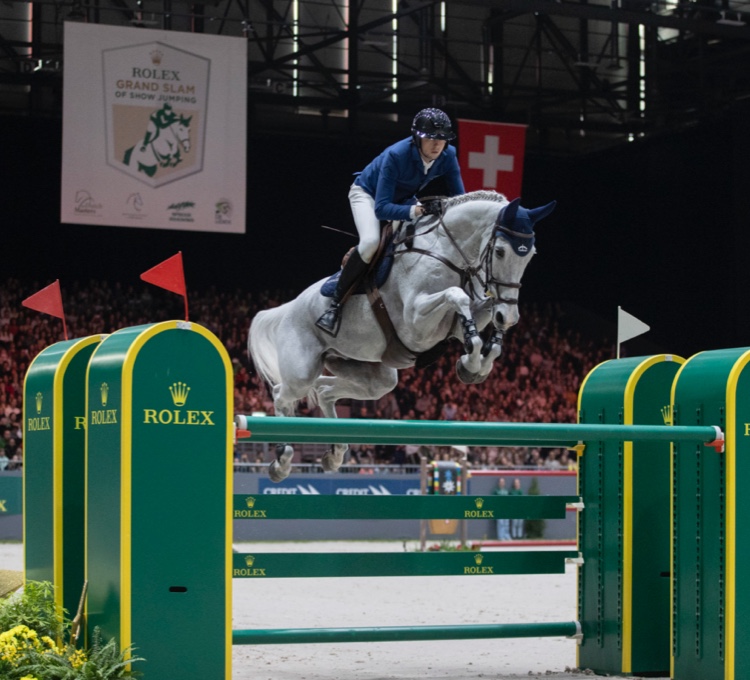
Whether a golfer, sailor or equestrian rider, criss-crossing the globe, they must always be ready, whatever the destination or distance travelled.
Spanish golfer Jon Rahm, Brazilian skipper Robert Scheidt and American show jumper Kent Farrington are among the Rolex Testimonies who have adopted the Sky-Dweller.
VISIT US TO DISCOVER FIRST-HAND THE SKY-DWELLER
As an Official Rolex Retailer, we are the only retailers allowed to sell Rolex watches. With the necessary skills and technical know-how, we will help you make the choice that will last a lifetime.
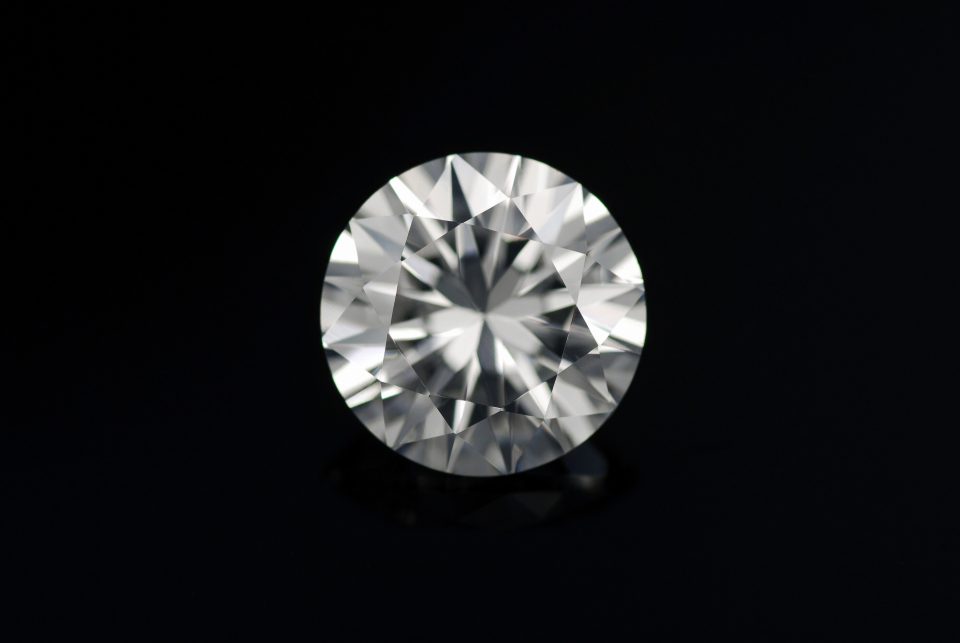
Diamonds are known for being the centrepiece in many varieties of jewellery. The sought-after gem comes in different shapes and sizes, which makes some more costly than others.
In this blog post, we will focus on what a diamond cut is, why it is important and how it can impact the price.
What is a diamond cut?
A diamond cut refers to how well a diamond is cut and polished. Additionally, it focuses on how the diamond is proportioned, its depth, and its symmetry.
How is a diamond cut?
Before a diamond ends up as part of impressive jewellery, it is cut and shaped. Diamonds are one of the hardest materials in the world, so the tools used to cut them are usually diamond bladed or have a diamond edge.
The five stages of the diamond cutting process are listed below.
Planning
Planning is one of the most critical steps in this process. A diamond cutter will use their expert knowledge and computer software to map individual diamonds.
Cleaving
Then, a diamond cutter will split a rough diamond, cutting it into several pieces. Usually, this will be done with contactless lasers or mechanical saw. The cutter must ensure to cleave along the diamonds tetrahedral plane, which is where it is weakest.
Bruting
Bruting, which is also known as cutting or girdling, is the step that carves the diamonds into their well-known shapes. The diamonds are placed to grind against each other on a spinning axle to create a rough finish.
Polishing
Polishing involves creating the pavilions, crowns, cutets and facets of the diamond. Usually, the cutter will place the stone into a rotating polishing wheel coated with an abrasive diamond powder. The powder smoothes the diamond as it is pressed against the wheel.
Inspecting
The diamond inspecting process is fundamental. It involves thoroughly examining the diamond to ensure it meets specifications. Once it has passed all inspections, it will be passed on and sold.
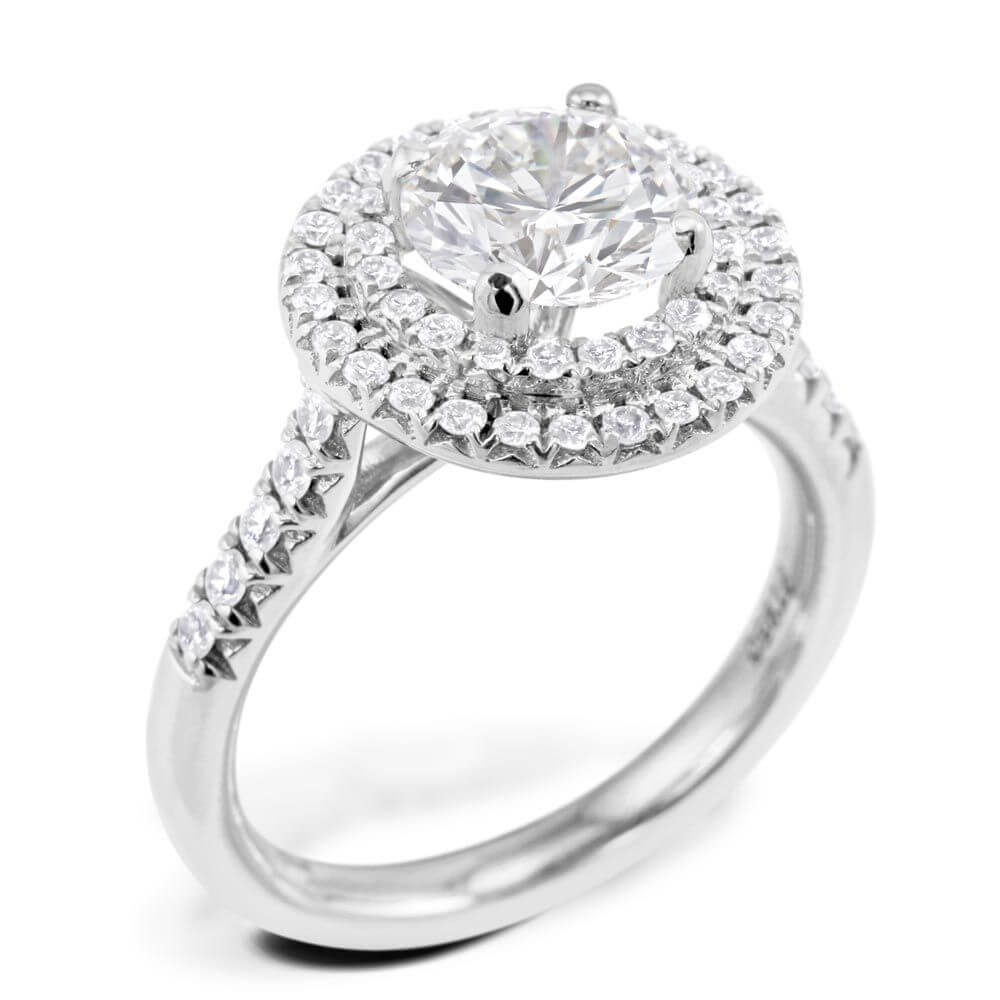
Platinum 2.04ct Round Brilliant Cut Diamond Engagement Ring With Double Diamond Halo And Diamond Set Shoulders
Why is a diamond cut so important?
Different cuts impact the appearance and perceived beauty of the stone. For example, if a diamond is well cut, it reflects white light and has a brilliant and luminous appearance.
If a diamond has a lower standard cut, it can appear dull. Ultimately, the cut quality impacts the beauty, appeal, and value of a diamond.
What are the different types of diamond cuts?
The GIA (Gemological Institute of America) has a grading system that applies to standard round brilliant cut diamonds and all clarities across the D-to-Z colour range.
As mentioned, a well-cut diamond is bright and can show a pattern with a contrast between light and dark areas. This results in reflections appearing crisp. The GIA has created five cut grades:
- Poor (P)
- Fair (F)
- Good (G)
- Very good (VG)
- Excellent (EX)
If a diamond has a Poor cut grade, it will appear dull and have many dark areas. Conversely, if a diamond has a Good cut grade, it will be quite bright but still have a dullness to the stone.
Now, if a diamond has an Excellent cut grade, it will be exceptionally bright. There will be an even pattern with significant contrast between light and dark areas, with crisp and well-balanced reflections.
Is there a difference between diamond cut and diamond shape?
Often, people can confuse the cut and shape of a diamond as being the same thing. The names linked with the shapes of diamonds are listed below:
- Round brilliant
- True
- Princess
- Cushion
- Emerald
- Oval
- Pear
- Heart
The cut refers to multiple aspects of the diamond that impacts the quality, whereas the shape is only the outline.
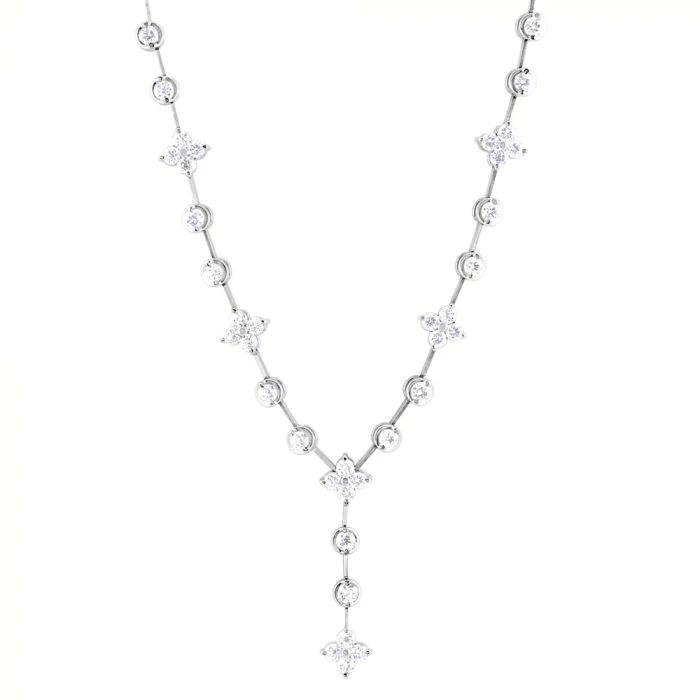
18ct White Gold 2.30ct Diamond Drop Flower Necklace
What is considered the “best cut” for a diamond?
In the GIA grading system, Excellent (EX) is the best possible cut for a diamond. Diamonds that have a cut of such a high standard are notably reflective and have an impressive brilliance.
For example, the 18ct White Gold 0.50ct Diamond Flower Cluster Necklace has brilliant cut stones that capture the light, which reflects on the 58 facets of each individual diamond.
Diamonds are regularly used in engagement rings, which is the perfect opportunity to purchase a high-quality cut diamond. The Platinum 2.54ct Round Brilliant Cut Diamond Engagement Ring with Halo and Diamond Set Shoulders is a prime example of this. The brilliance and clean cut of this diamond is immediately noticeable.
How do different diamond cuts affect the price?
Inevitably, the higher the quality of diamond cut, the higher the price. With diamonds, the main factors affecting the price are the four Cs, which refers to the following:
It is often argued that cut is the most critical of the four Cs. Many aspects of a diamond cut can impact the price — for example, the proportions, symmetrical facets, brilliance, fire, scintillation, and finishing details are but some.
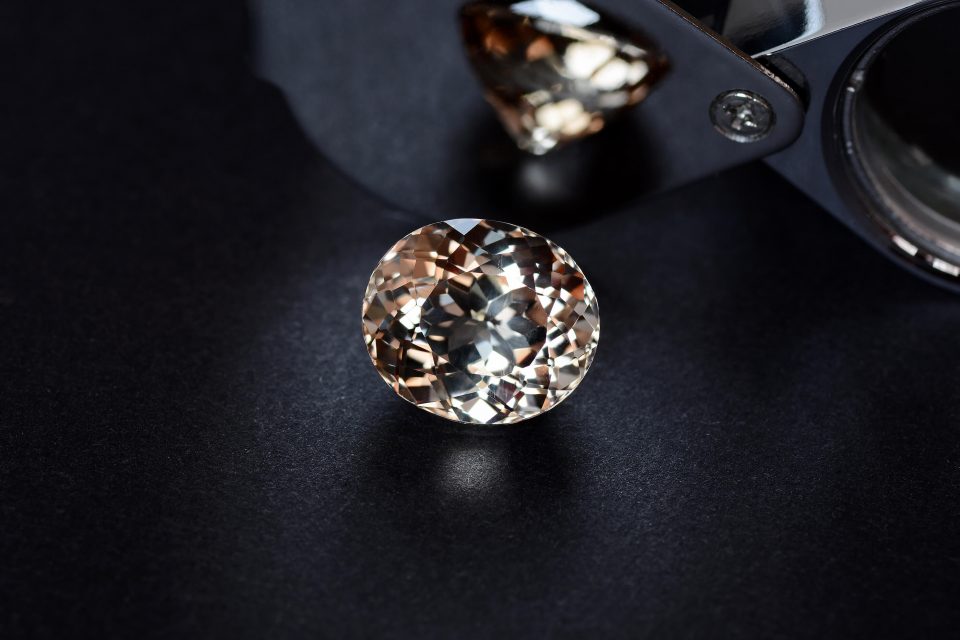
This month we are looking at topaz as part of our “meet the gemstone” series.
Topaz gains a lot of its reputation through its impressive array of colours and its strong standing as the November birthstone.
The colour of topaz is caused by impurity elements or defects in the crystal structure, rather than its chemical composition. This is known as being “allochromatic”.
If you would like to learn more about this impressive gem and its fascinating history, this article will delve into all aspects of topaz, from its symbolism to how it is used in everyday life.
How did topaz get its name?
Although the history surrounding how topaz got its name is unclear, we know that a small Egyptian island (Zabargad) in the Red Sea was previously known as “Topazios”. In Greek, “topazos” means “to seek”.
It is not believed that topaz was ever produced on the island, although, other yellow gemstones were found there. It is important to note, however, that the island was previously a source of peridot and the two gems are often confused.
Many scholars and researchers believe the origin of the name topaz goes back to Sanskrit, which is an ancient language of India. The words “topa” and “topaz” translate to “fire”.
This naming could be due to gemstone fire, which is the splitting of white light into a rainbow of colours within the gem. Or it could be because of the striking colour that topaz often boasts.
What colour is topaz?
In its natural state, topaz can be colourless as well as having a wide range of shades, from golden brown to orange, and yellow. However, through various treatments, the stone can become deep red, orange, pale green, and blue.
Certain types of topaz are known as “precious topaz”, which refers to stones that boast a golden yellow or peachy orange shade.
Often, irradiation is used to intensify the colour shades in topaz. For example, colourless topaz can change to a unique and beautiful blue after radiation exposure treatment.
There are very strict regulations in place for those in the gem trade to ensure stones have cooled properly after irradiation so that they are safe to trade.
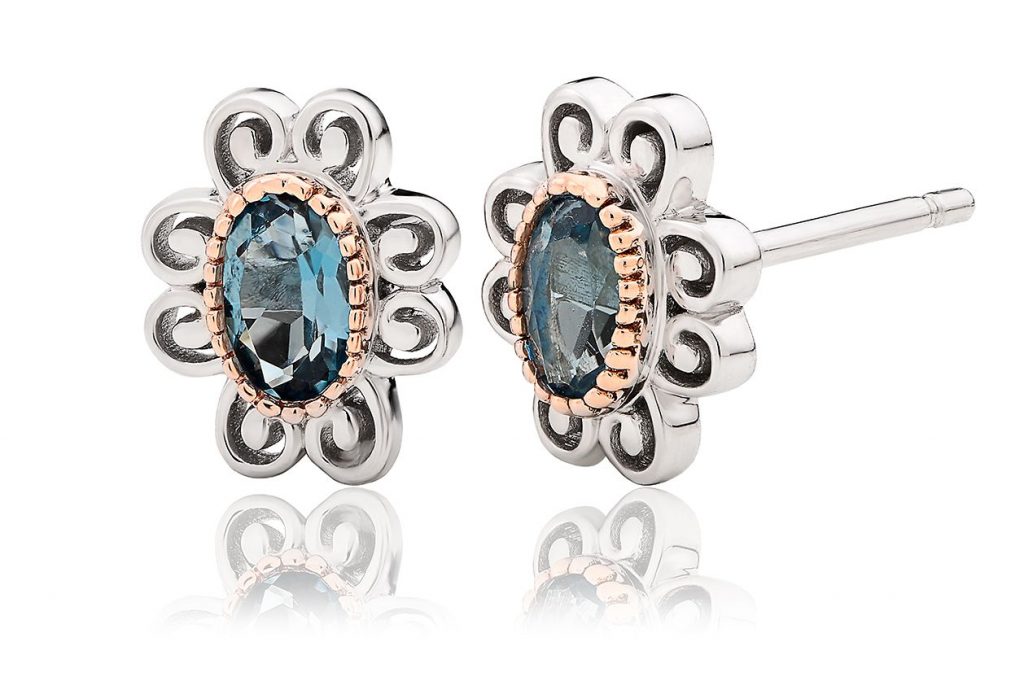
Clogau Silver And 9ct Rose Gold The Two Queens Topaz Stud Earrings
How strong is topaz?
Topaz is one of the stronger gemstones, coming in at an impressive Mohs hardness of eight. The Mohs scale, created by Friedrich Mohs in 1812, is a standard metric to measure the “hardness” of minerals. Diamond is at the top, scoring a ten, and pearls are toward the bottom, varying from two to four.
Although topaz is difficult to scratch, you should still focus on protecting and cleaning your gemstone to the best of your ability.
What symbolism and beliefs surround topaz?
Topaz was discovered thousands of years ago and has many legends throughout its intriguing history. As mentioned earlier, topaz translates to “fire” in Sanskrit, which links to a large proportion of the powerful symbolism connected with this often sun-filled gemstone.
In ancient times, the gem was thought to have the power to protect against enemies and fires. Additionally, the stone was seen to be symbolic of love and purpose in other cultures.
How big was the largest topaz ever found?
The most famous and record-breaking topaz is the “American Golden Topaz”. Originating in Brazil, the 172-faceted gemstone weighs in at an impressive 22,892.5 carats (4.58 kilograms).
This find is known as the largest cut yellow topaz in the world and is, in fact, one of the largest faceted gems of any type.
What is topaz used for?
Due to the plethora of shades within topaz gemstones they are the perfect choice for jewellery pieces.
Topaz is commonly found in rings, earrings, necklaces, and bracelets. Alongside its breathtaking appearance, its durability is also celebrated, which is why some choose to wear topaz jewellery on a regular basis.
Here at Robert Gatward, we have a wide selection of topaz jewellery for you to choose from. You can explore our full range of topaz jewellery on our website, or visit us in-store.
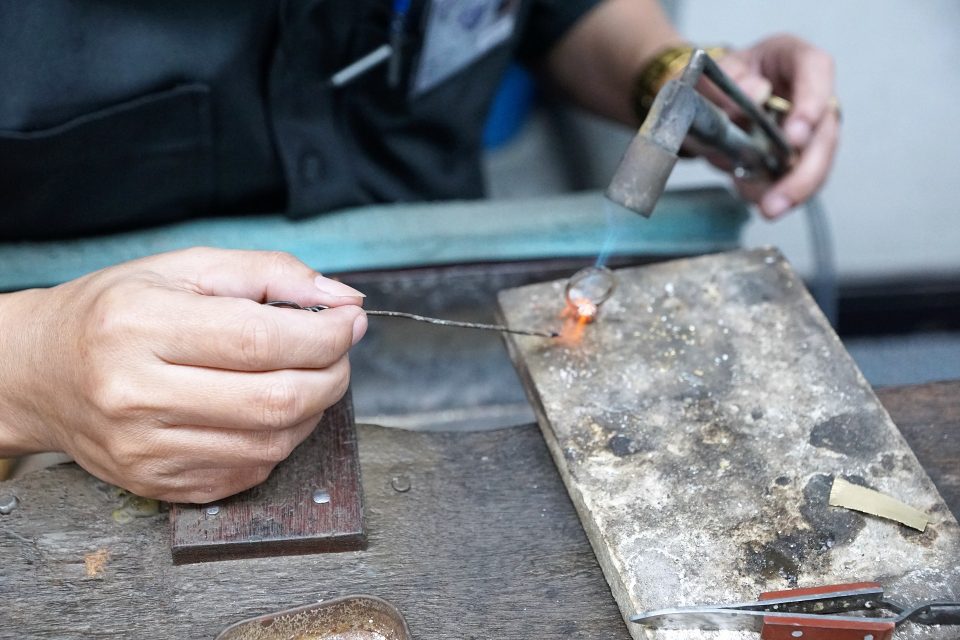
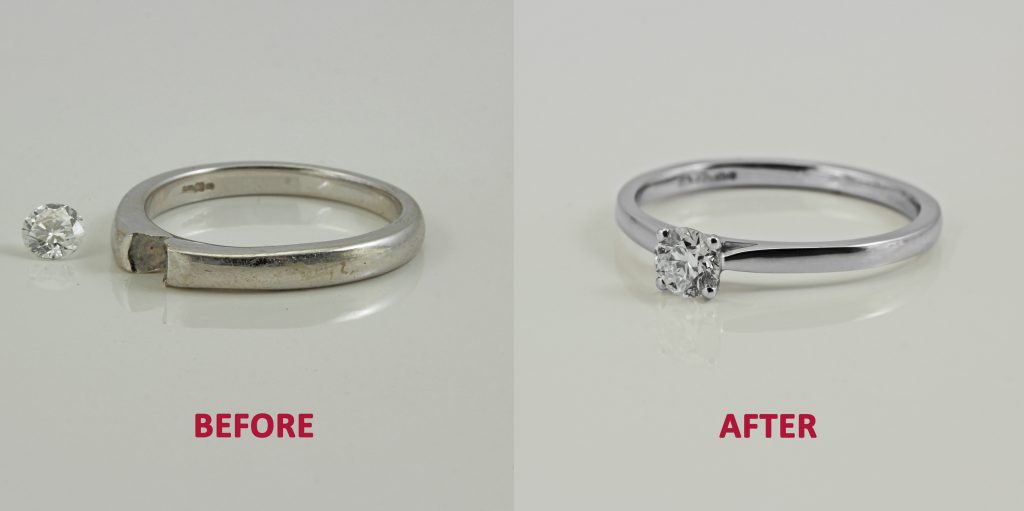
LET US HELP YOU TURN SOMETHING OLD INTO SOMETHING NEW
| Remodelling heirloom pieces into modern marvels is a growing trend, and pre-owned and pre-loved jewels can be transformed into beautiful, bespoke pieces that can be passed on to future generations.
Here at Robert Gatward Jewellers, our in-house service makes it simple to remodel a vintage engagement ring,or to make a stunning new piece from some dated diamonds that are no longer worn. With great sentimental value, old pieces can be cleverly redesigned to be wearable, while retaining their original charm. Altering jewellery has existed for decades, but nowadays the upcycling trend is more sophisticated and sought-after than ever – and the possibilities are endless. At Robert Gatward Jewellers, we make it possible to breathe new life into special pieces by recasting pre-loved stones into new rings, earrings or bracelets or to melt down precious metals and reshape them into one, or many, new pieces. Marc Morrison, General Manager from Robert Gatward Jewellers says: |
“Creating something fresh and original from heirlooms requires collaboration from the client. From the design of the setting to the sourcing of additional stones, this is a process of co-creation that ensures the end result feels precious and personal to the wearer.”
Modifying heirloom jewellery to create new tailor-made engagement and wedding bands is proving particularly popular at present. As well as being cost effective, it and can greatly enhance sentimental value – and a ring like created this way ensures family history is woven into the story of your romance for good. As part of our bespoke service, you will work with our expert team to create a stunning new look style. Our jewellery craftsmen will work with jewellery of any metal, age or style and make it shine once again, and at Robert Gatward Jewellers we will strive to restore the emotional connection you get with a remodelled piece of heirloom jewellery. After all, it’s a perfect blend of past, present and future. Visit us in store today to find out more. |

Shopping for a special man on your seasonal gift list? These thoughtful jewellery and timepiece gifts are sure to earn you top marks this Christmas.
What to buy the guy who has everything…
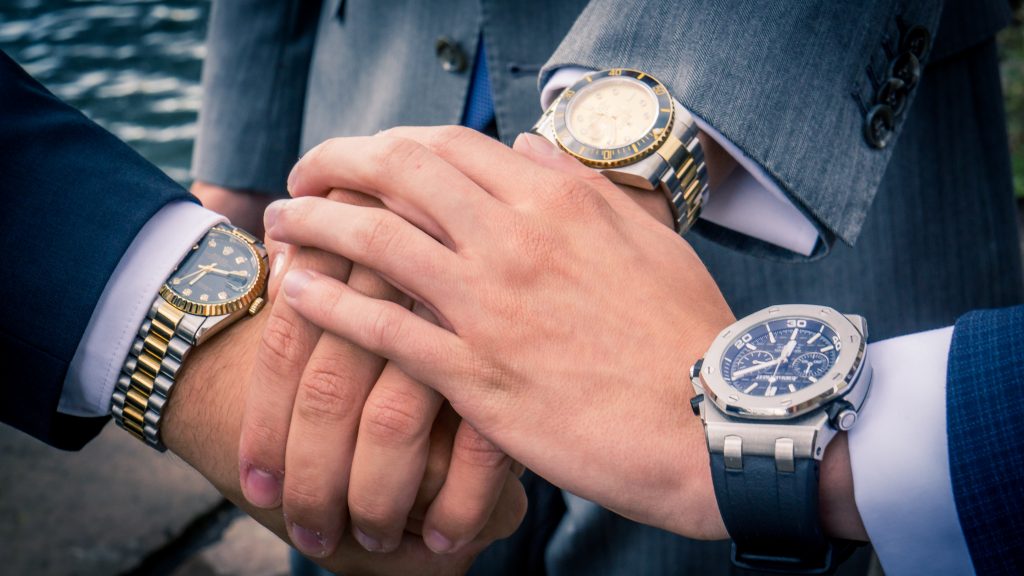
Watches
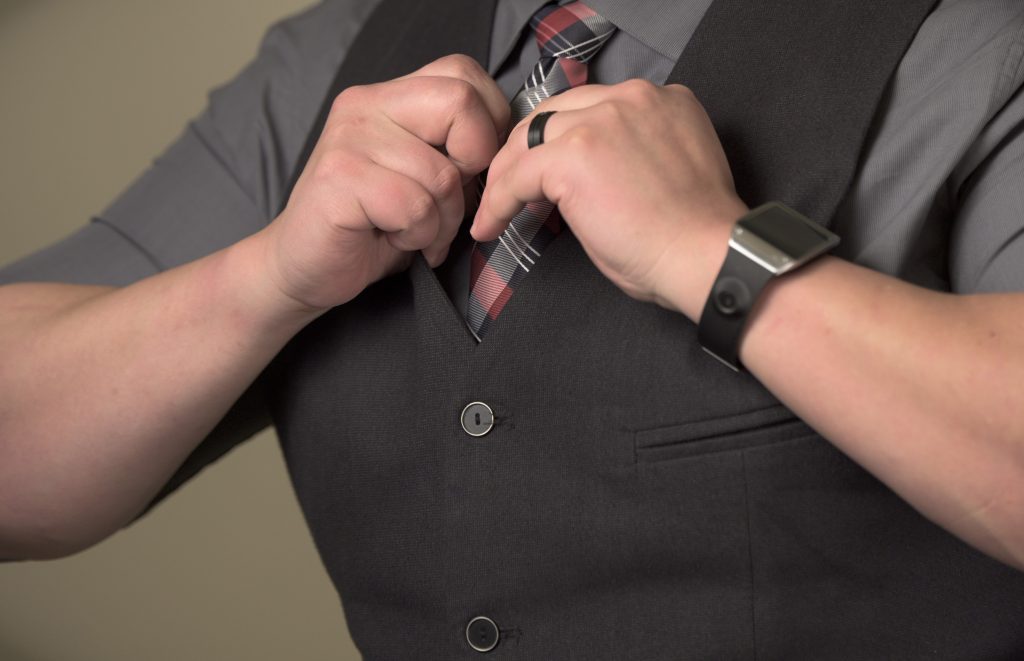
“Time is a gift.” A phrase you have undoubtedly heard, or uttered at some point in your lifetime. When taken quite literally, it can’t be argued that a luxury watch is the gift of time that no man will be disappointed with on Christmas Day – or any day of the year!
Luxury timepieces are essential to any welldressed man’s wardrobe and we’re sure it will be received with the same amount of excitement as some serious sparkle would be for the opposite sex. Clock our favourite timepieces above and watch his face light up…
Rings
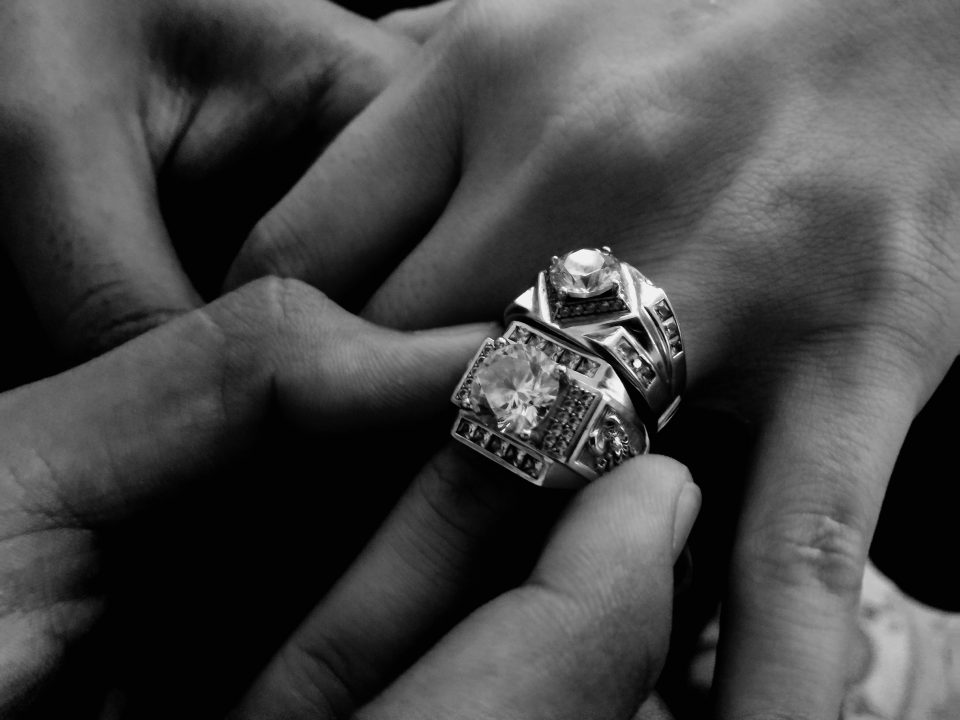
Rings made from raw, brushed or unpolished metals are an emerging trend when it comes to male jewellery. Look out for strong metals like titanium, zirconium or steel with unburnished finishes to create a masculine look that will work with both a casual and business wardrobe. Ring in the changes with this selection of bands guaranteed to step up his style game…
Cufflinks
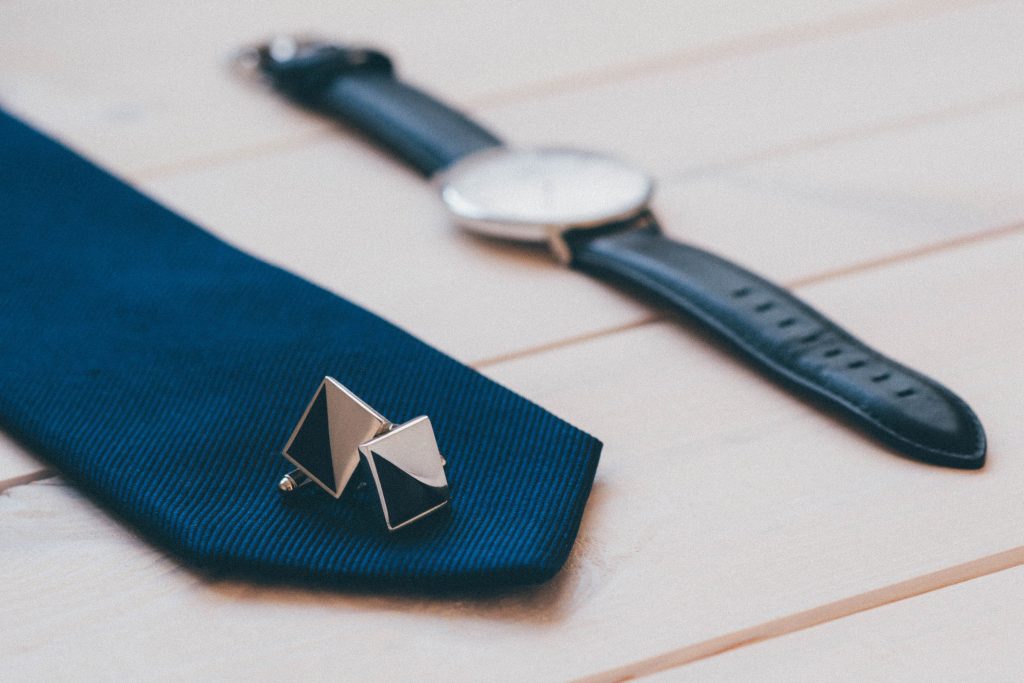
For a man who showcases the same sharp style at work as he does at any formal occasion, a set of cufflinks will make the perfect gift. No matter whether they are for husband, dad, friend, brother or boyfriend, our sets will add a smattering of sophistication to his attire over the holiday season and beyond.
Secure his favourite shirt with a cufflink set from the choices above…

Pen
Maybe he used some carefully considered penmanship while crafting his festive wish list for you?
If not, it’s time to introduce him to the joys of a good writing implement. If he’s already an enthusiast, he’ll appreciate a new model to add to his collection. A first-class pen, like a luxury watch, is a must have item for the concerning gentleman. Be it fountain, rollerball or ballpoint, a pen provides a generous hit of indulgence for those so inclined. As they say…the pen is mightier than the sword!
Add some spirit to his script with one of our top styles…

Diamonds are a girls best friend!
Stuck on what to get your mother, wife, sister, best friend, or lover this Christmas?
A keep-forever piece of jewellery is almost always a safe bet. A wise woman once said that diamonds are a girl’s best friend – and who are we to argue with that?
Diamonds make the perfect Christmas gift. Nothing can beat the frosty sparkle they bring to a hand, a wrist, ears or a décolletage and the festive feeling she’ll have while sporting them. If you are in the market for a few extra-special and extra sparkly gifts (or maybe you need inspiration for your very own wish list?!) then look no further than our comprehensive guide to diamond pieces she will treasure forever…
Diamonds are a girls best friend!
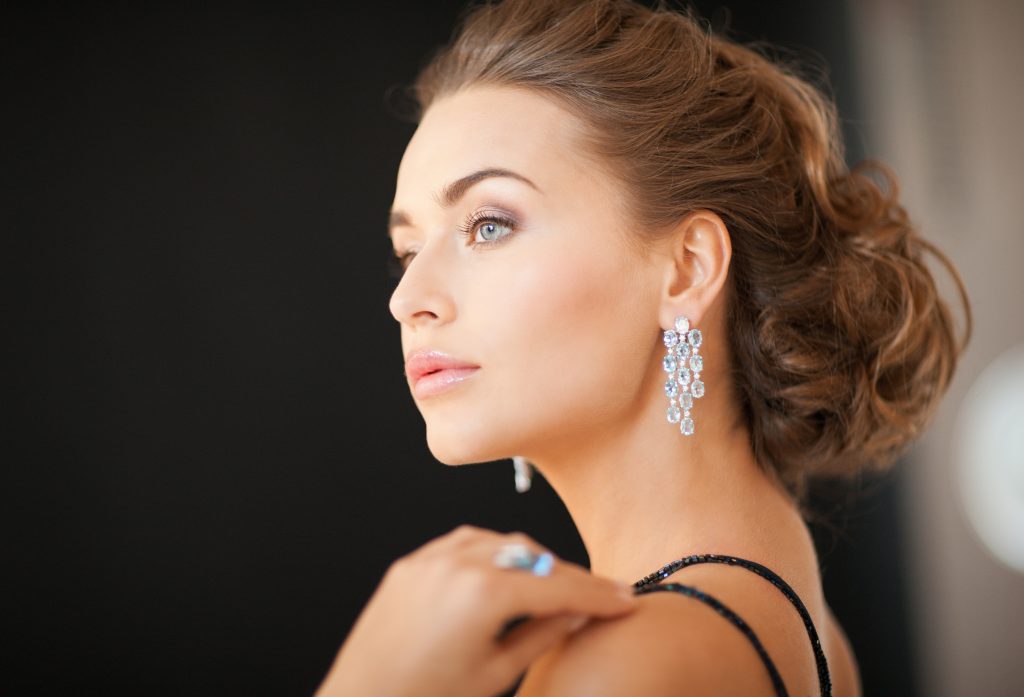
beautiful woman in evening dress wearing diamond earrings
Earrings
Simple diamond studs are a must-have item in every woman’s jewellery wardrobe – no matter what her style is. There are so many price points to choose from, all you have to do is decide carat weight, cut, quality and metal. Voila – you have a gift that virtually any woman with pierced ears would be ecstatic to unveil.
If she already owns diamond studs, or if her taste tends to be a little more fashion-forward or elaborate, look out for statement diamond drop earrings as recently sported by both Kate and Meghan at Prince Charles’ 70th celebrations. With these styles, drops often feature a larger diamond in a more decorative setting. Diamond hoops are another chic choice that can take any style from workdays to weekends and everything in between.
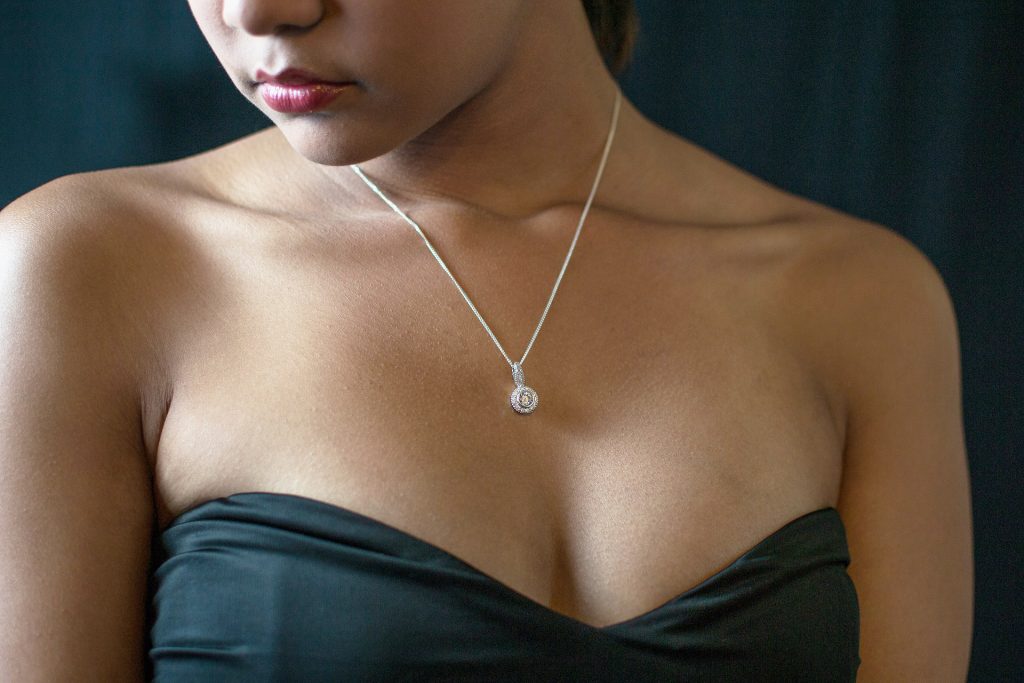
Necklaces
A diamond necklace makes the perfect gift for women of all ages. If you are after sheer elegance, opt for a simply stunning solitaire pendant with a matching chain to compliment.
If she is a fashionista, then browse the selection of diamond necklaces destined to appeal to her trendy side. From diamond-encrusted pendants featuring her initial or a meaningful word, to charms with significant motifs such as a flowers, hearts, stars, crosses – the selection is endless.
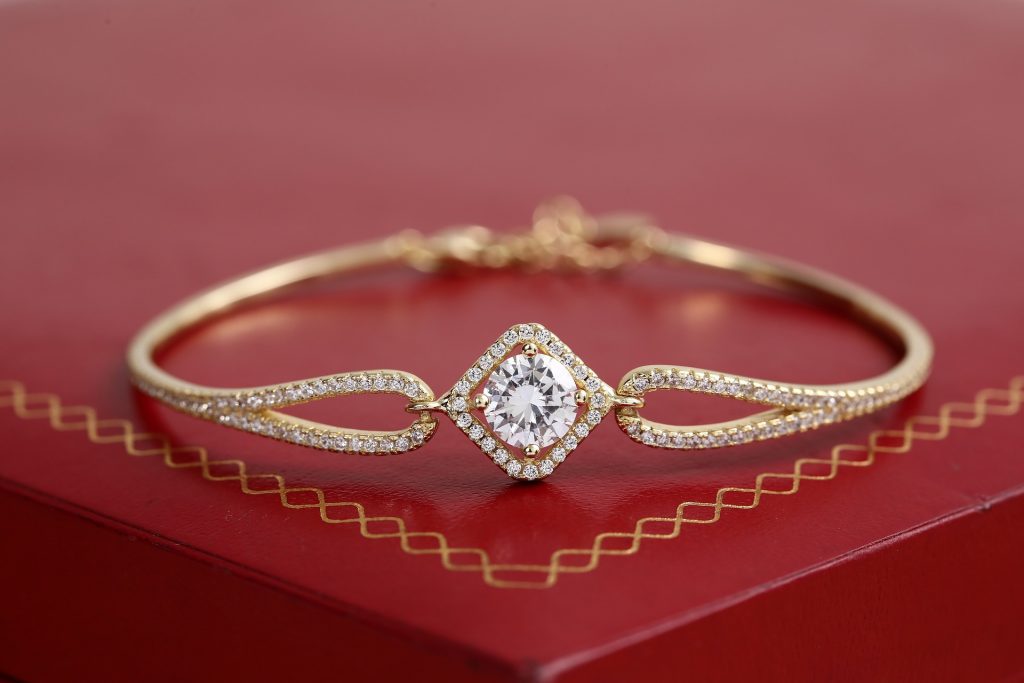
Bracelets
A diamond bracelet is something she can see and enjoy every day she wears it, and what’s better it will always remind her of you and your expert gift giving skills!
A simple bangle set with one or a selection of diamonds in her preferred metal makes a wonderful addition to an on-trend stack of bracelets – with the added benefit of looking great on its own. Diamond tennis bracelets are a perpetual favourite and come in carat weights and qualities to suit almost any budget, or maybe a charm style with diamond adornments that mean something special to her or you both.
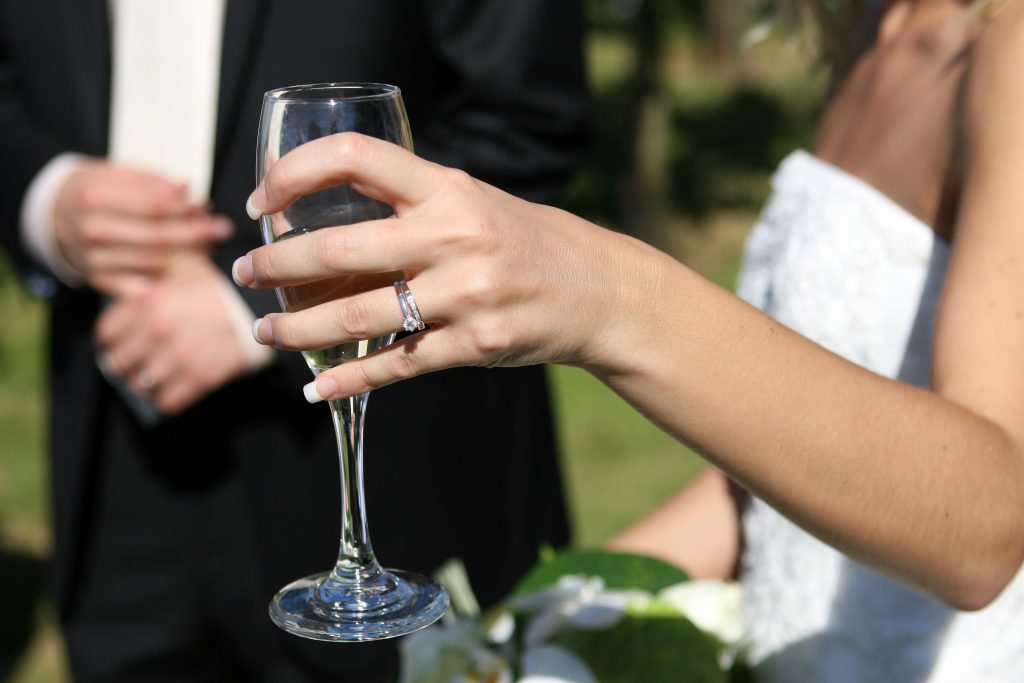
If you’re already engaged or married, giving a diamond ring she can wear either alongside or on the other hand is a no-brainer, and a ring style that’s a bit more envouge than her bridal bling is sure to make a very welcome gift.
Why not consider a diamond ring accented by an everpopular coloured gemstone for guaranteed flair? A right-hand ring with a fancy design or a classic-cut stone will be something she’ll want to show off every day of the week.
If you’re not married or engaged, tread carefully in ring territory! It wouldn’t be ideal to begin Christmas Day with the “it’s not that kind of ring” conversation now would it? If she is hankering for that type then perhaps best to stay safe with one of the alternative options above!
watches
Regardless if you have three or six figures to spend there will be a diamond dazzled style to suit the lady in your life. From fashion-forward pieces, and designer names to enviable Swiss styles, you’re guaranteed to find the perfect Christmas gift for someone very special (and very lucky!).
No matter her style or your budget, there is sure to be a special piece of diamond jewellery that will make Christmas Day her favourite of the year. Season’s greetings – and happy shopping!
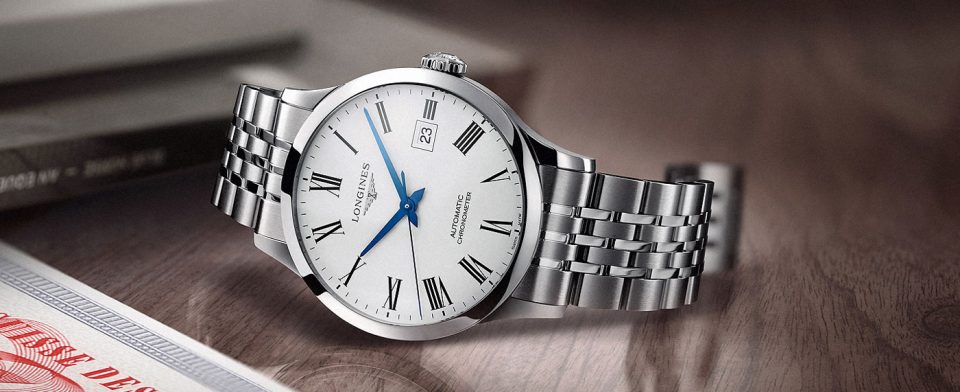
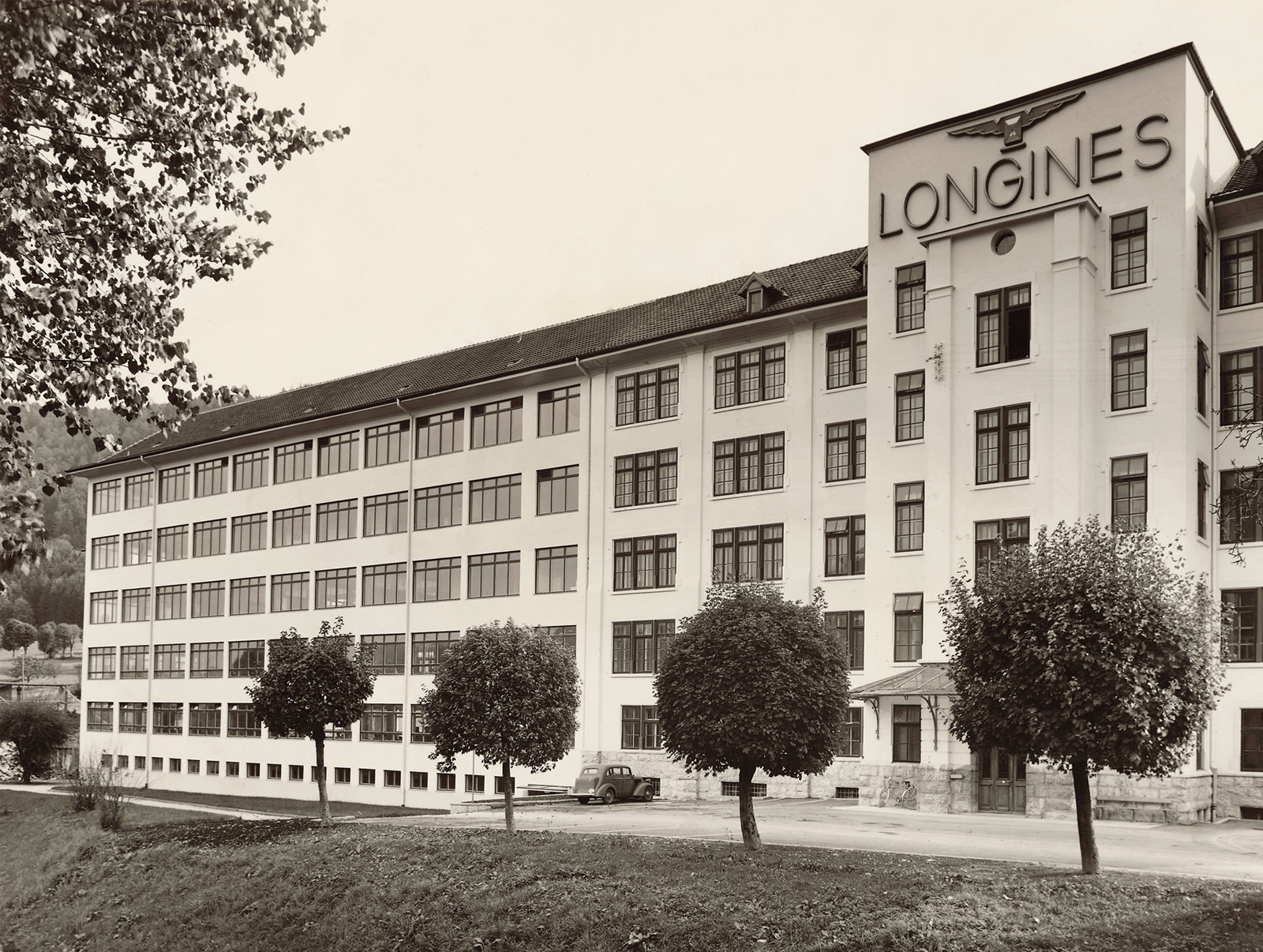
Longines has been based at Saint-Imier in Switzerland since 1832. Its watchmaking expertise reflects a strong devotion to tradition, elegance and performance. With many years of experience as a timekeeper for world championships in sports or as a partner of international sports federations, Longines – famous for the elegance of its timepieces – is a member of the Swatch Group Ltd, the world’s leading manufacturer of horological products. The brand known by its winged hourglass logo now has outlets in over 150 countries. In 1832 Auguste Agassiz entered the world of horology when he joined a trading office established in St. Imier. He soon rose to become the manager and the company took on the name Agassiz & Co. At the time, he was producing timepieces under the “établissage” system, whereby watchmakers worked at home and supplied their products to the trading offices. Agassiz built up a network of commercial contacts which enabled him to sell his watches on other continents, in particular in North America. During the 1850s Agassiz’s nephew Ernest Francillon took over the running of the office. When Francillon took on this responsibility, he considered ways of perfecting the manufacturing methods used in watchmaking in the area.
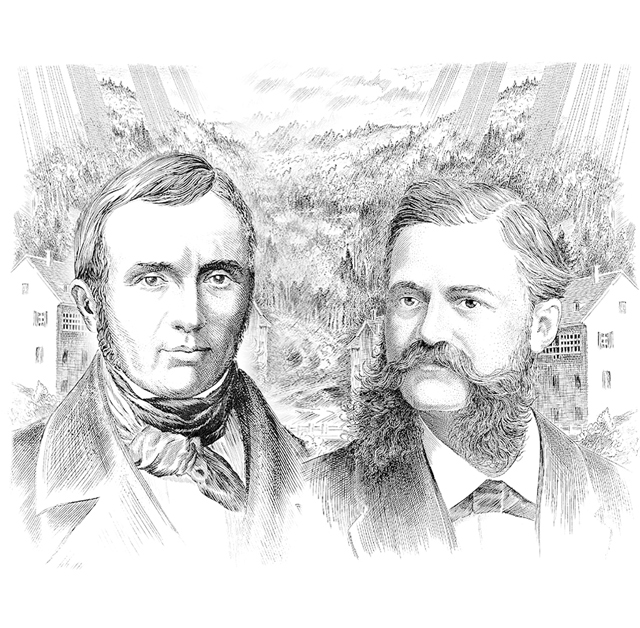
Below we explore some of the extraordinary history of the Longines company from its creation in 1832 to the present day.
1832
The Saint-Imier watchmaking establishment is founded by Auguste Agassiz, brother of the famous naturalist Louis Agassiz. Auguste and his two partners make and sell pocket watches with crown wheel escapements similar to those produced by the Swiss watchmaking industry in general.
1852
Ernest Francillon, Auguste Agassiz’s nephew, joins Saint-Imier. This qualified economist gradually takes over the family business.
 1867
1867
The Longines factory, located in Saint-Imier – or, more precisely, in Es Longines (“long meadows”) – is inaugurated in 1867 by Ernest Francillon. That same year, it produces its first movement, the 20A. This 20-line calibre has an anchor escapement, as well as a pendant winding and setting mechanism. It wins an award at the Universal Exhibition in Paris in 1867.
1878
With its new mechanical procedures, Longines produces a simple chronograph movement, the 20H calibre, patented by the watchmaker Alfred Lugrin. 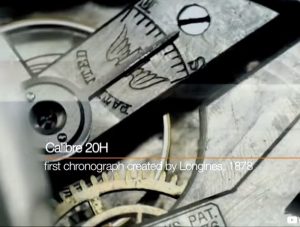 This is the first mechanism manufactured by Longines that can be used for precise timing, an area in which the brand will invest heavily from the end of the 19th century.
1888
Having laid the foundations for a production system using machine tools, Longines now becomes involved in high-precision timekeeping and produces its first movement for a certified chronometer, the 21.59 calibre. This chronometer movement is based on the calibre developed in 1878 which is adapted to improve its accuracy.
 1899
1899
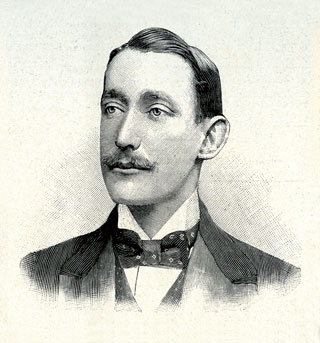
Longines is associated with exploring for the first time, when it equips Prince Luigi Amedeo of Savoie, Duke of the Abruzzi, in his Arctic expedition.
1912
The first system of electromechanical sports timing – using wires which when broken respectively start or stop the watch – is used at the Federal Gymnastics Festival in Basel.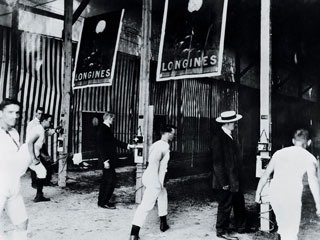
1927
US Navy officer Philip Van Horn Weems develops the “weems System of Navigation”, a series of navigational devices, based on which he and Longines develop a rotating disc watch, enabling the wearer to synchronise the second hand with a GMT signal, essential for navigation: the Longines Weems Second-setting watch. A patent for this watch is filed in 1935.
1939
Longines, basing its research on a 24-line calibre, develops mechanical timekeeping equipment, including a chronograph with a semi-instantaneous sports counter with or without flyback hand, and another counter accurate to a hundredth of a second.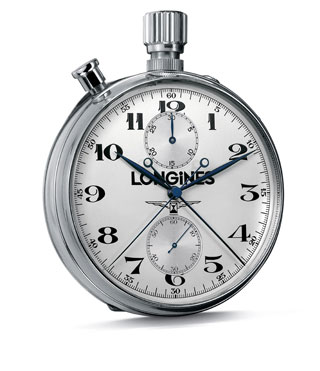
1947
The technical office develops a new hand-wound mechanical movement with a chronograph function, the 30CH.
1957
The elegant Flagship collection is launched, with its distinctive medallion featuring a caravel engraved on the caseback.
1967
Longines launches a self-winding 11 ½ -line calibre, aiming to offer an alternative to the electronics and quartz used by the competition. The regulating organ of the L430 movement is a guarantee of accuracy, with the characteristics of a competition piece, as it vibrates at a frequency of 36,000 vibrations per hour. The Ultra-Chron collection is based around it.
1977
The factory develops a mechanical self-winding calibre, the L990, with two barrels placed on the same level. With a height of only 2.95mm, it is the world’s flattest self-winding movement of its kind. At a time when quartz is dominating the output of many watchmakers, it strengthens Longines’ range of mechanical movements.
1985
Longines is named official timekeeper forall the artistic and rhythmic gymnastics events organised by the International Federation of Gymnastics (IFG).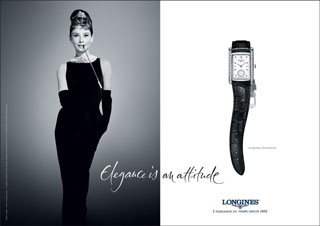
1999
Adoption of the slogan “Elegance is an attitude”, which references Longines’ devotion to elegance in all things: not only appearances, but acts and behaviour as well.
2009
Aware that its recent developments have somewhat neglected the feminine wrist, Longines fills this gap by launching the Longines PrimaLuna collection, devoted entirely to women.
2014
Longines celebrates the year of the horse by launching a pocket watch in rose gold: the Longines Equestrian Lepine. The back of this exceptional piece is adorned with a horse jumping an obstacle and its inspiration was drawn from a metal Lépine pocket watch dating from 1927 and kept at the Longines museum in Saint-Imier.
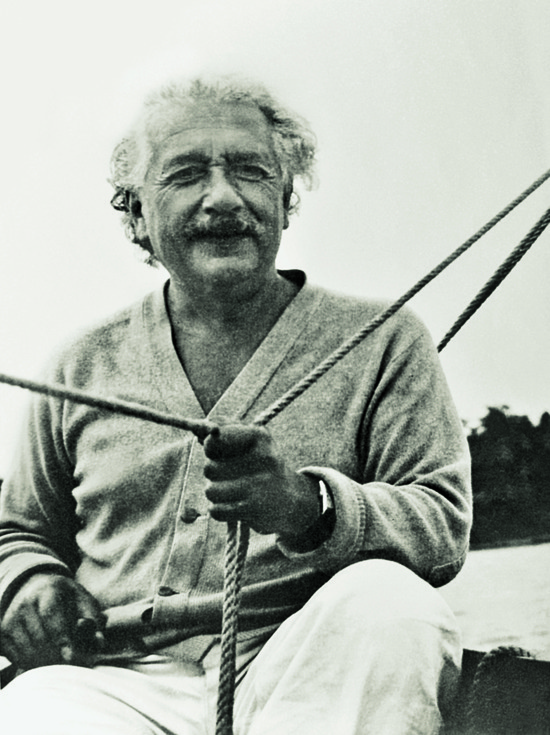
Albert Einstein’s Longines watch
In 2008 at Antiquorum, the famous New York auction house, a Longines watch that had belonged to the famous physicist Albert Einstein was sold. The timepiece – an elegant gold model dating from 1929 – fetched a total of $596,000, thus becoming the highest price a Longines watch has ever sold for at auction. Wow!
If you would like to explore the exceptional elegance of the Longines watch collection, you can do so here.
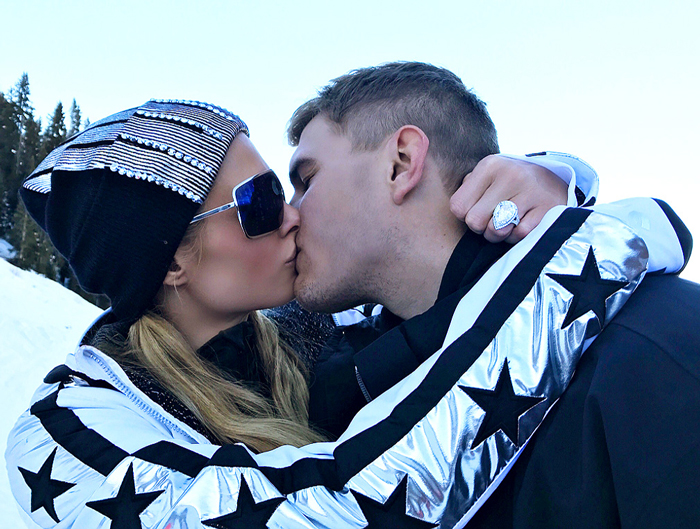
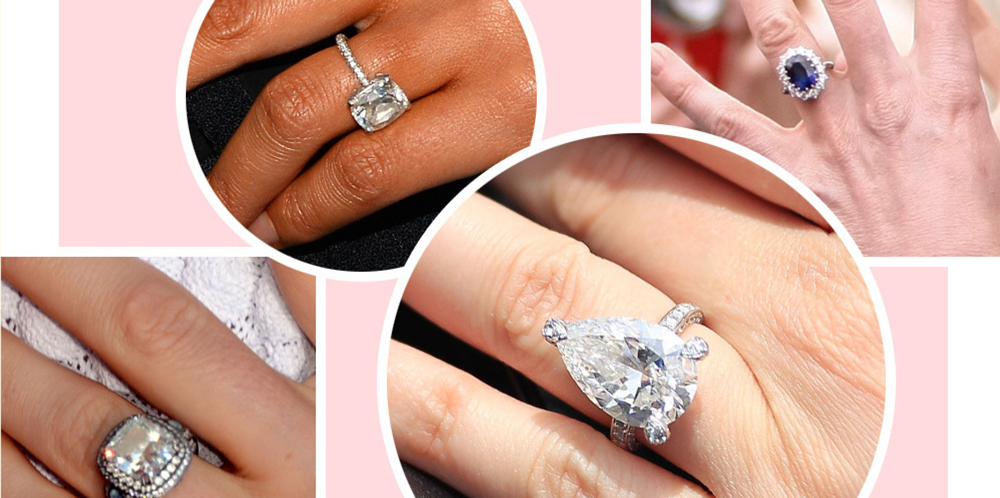
From Liz Taylor’s 33.19 carat rock, to the Duchess of Cambridge’s heirloom sapphire, the celebrity engagement ring is an object of constant fascination.
Here, we showcase the most iconic styles, from Hollywood’s Golden Era to modern-day A-list bling.
Covering everything from pavé, to pear and princess cut – we have celebrity-style rings to suit every budget.

H A I L E Y B A L D W I N
After teasing us with blurry paparazzi snaps, the model was officially photographed for the September issue of Vogue Mexico – complete with new engagement ring…and it’s even grander and glitzier than we first thought. In the stylish black and white shot, all eyes are on the ring and Hailey looks super casual as she shows off her oval stone and 18-carat gold band. Good work Bieber!
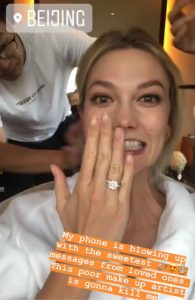
K A R L I E K L O S S
Karlie Kloss has bagged herself some serious bling. Hours after announcing her engagement to long-time beau Joshua Kushner, the supermodel-turned-tech entrepreneur debuted the new ring on her Instagram story. She flaunted the rock, which appears to be a cushion-cut diamond on a slim pavé diamond band, in a video of herself getting her glam on backstage in Beijing.
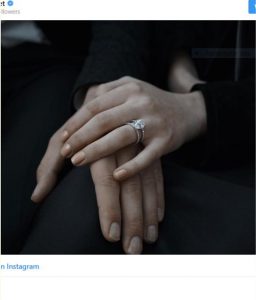
S O P H I E T U R N E R
After dating for over a year, the Game of Thrones actress and her Jonas brother fiancé took to Instagram to break the news to fans and share a gorgeous photo of Sophie’s rather sparkly accessory – a pear-cut diamond on a studded pavé band. The pair are set to wed soon with her screen sister, Maisie Williams, thought to be acting as Maid of Honour so expect things to go off. Although not ‘Red Wedding’ style. Obviously.
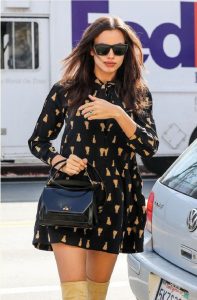
I R I N A S H A Y K
The Victoria Secret model has been dating movie star Bradley Cooper since 2015, so after she slayed the catwalk and announced their baby news, we hoped wedding bells were on the cards. Our dreams came true when she stepped out in Los Angeles and flashed a glittering ring on her engagement finger. The emerald stone, surrounded by a pear-shaped diamond halo is set in yellow gold. Traditional with a bit of a twist!
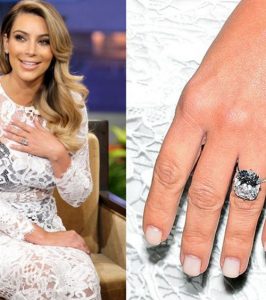 K I M K A R D A S H I A N
Kanye West reportedly spent a cool $8 million to procure Kim Kardashian’s eye-popping 15carat cushion-cut diamond rock, set in a pavé band so delicate, it looks as though the diamond is floating on air. The rapper popped the question in front of their friends and family at the AT&T Park in San Francisco, complete with live orchestra. Aiding his grand effort was the stadium’s jumbo screen, which flashed the sign, “PLEEEASE MARRY MEEE!!!”. So extra. So Kanye.
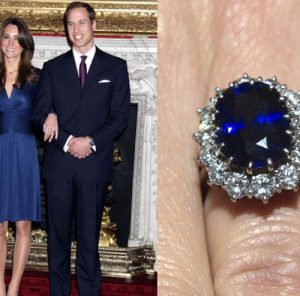
K A T E M I D D L E T O N
The Duchess’s sapphire and diamond ring used to belong to the late Princess Diana. The 12 carat oval blue sapphire is surrounded by fourteen solitaire diamonds in a setting made from 18K white gold. While royal engagement rings are traditionally custom-made, this ring was a part of Garrard’s regular retail collection which raised a few eyebrows in the past, but the Kate effect, made coloured gems modern again.
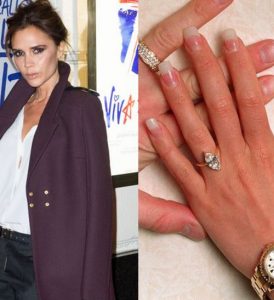
V I C T O R I A B E C K H A M
He was the Manchester United star, she was the chart-topping girl band member, so it was a match made in heaven! In true fashionista style, the now designer has been spotted wearing not one, but 13 engagement rings during her 16year marriage to footballer hubby, but when David first proposed in 1998, he did so with a three-carat marquise-cut diamond set on a plain yellow gold band.
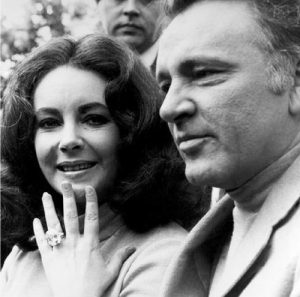
E L I Z A B E T H T A Y L O R
In 1986, five years into their first marriage, Richard Burton gave Elizabeth Taylor one of the mostrenowned diamonds in the world, the Krupp Diamond – now known as the Elizabeth Taylor diamond. Though technically not an engagement ring, it’s widely reported that the actress wore the 33.19 carat Asscher-cut rock almost daily making it one of the most iconic rings of all time.
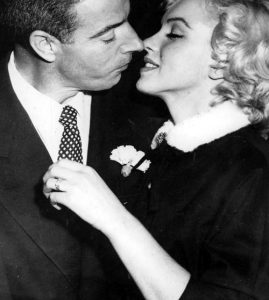
M A R I L Y N M O N R O E
Baseball legend Joe DiMaggio gifted Marilyn with a gorgeous platinum eternity ring complete with 35 baguette-cut diamonds. It was technically it was her wedding band, since DiMaggio gave it to Monroe on their wedding day in 1954. And although their union sadly didn’t stand the test of time, this ring’s understated and simplistic elegance is exactly why the style is still a popular setting choice for engagements today.
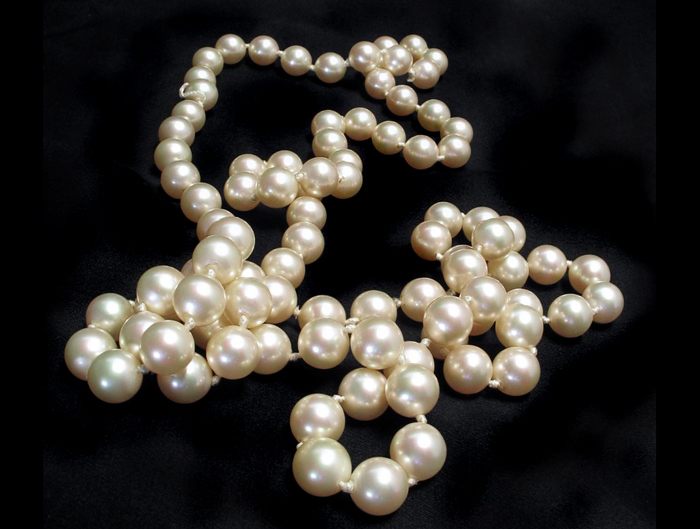
“A pearl is a living jewel” – Kokichi Mikimoto
The creation of pearls is a fascinating process. Pearls are formed inside the shell of certain molluscs as a defence mechanism against a potentially threatening irritant such as a parasite inside the shell. To protect itself from this irritant, the mollusc secretes thousands of layers of nacre, forming a pearl. The pearl’s iridescent luminosity has bewildered men and women alike for thousands of years. Whether offered in romance or taken in victory, worn as a symbol of chastity or a mystical aphrodisiac, pearls have been and continue to be among the most coveted gems in the world.
Below we explore some of the types of pearls available today.
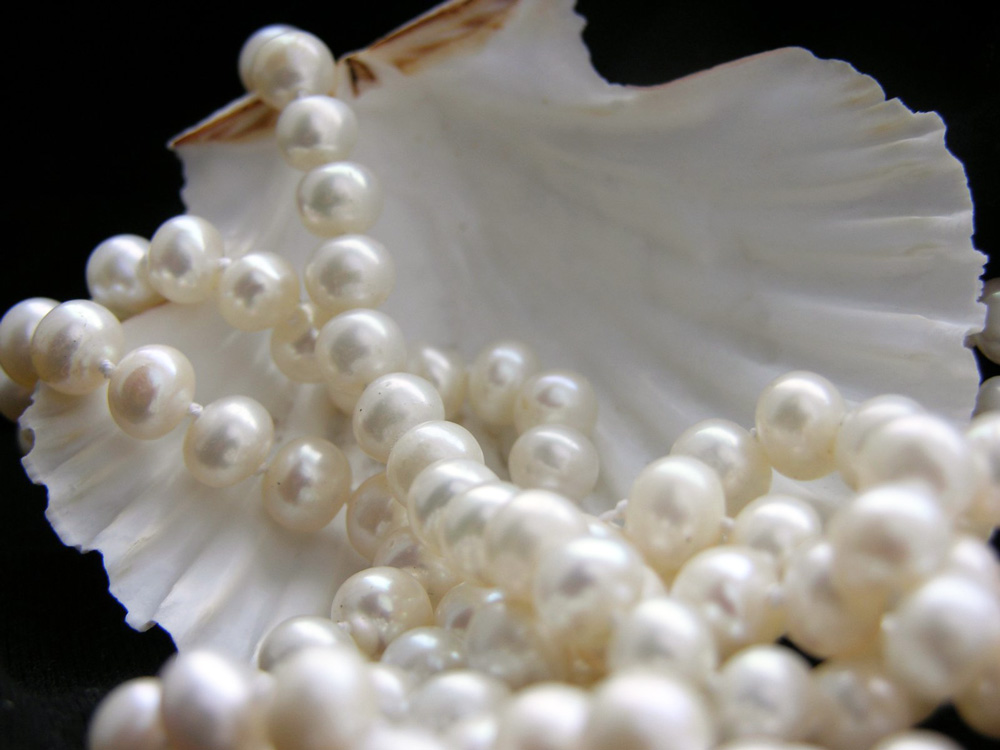
Natural Pearls
These pearls are extremely rare, occurring spontaneously in the wild and hence very valuable. They are almost 100% nacre and come in many shapes with perfectly round ones the rarest of all. Finding one of these pearls would be down to an extreme stroke of luck.
The majority of pearls sold today are either cultured pearls from pearl oysters or freshwater pearls from mussels.
Cultured Pearls
These pearls have been formed by imitating the process in which natural pearls are formed. Instead of an irritant accidentally finding its way into the shell of an oyster, a nucleus of the soon to be pearl is implanted within the shell. At Robert Gatward we sell quality cultured pearls that have been crafted into extraordinary pieces of jewellery. Some of the types of cultured pearls that we have available are:
Akoya Cultured Pearls
Prized for their brilliant lustre and rich colour, Akoya pearls are a traditional symbol of elegance and beauty. Produced by Japan’s Akoya oysters, they are the most popular of all cultured pearls. Depending on the size of the mother oyster, they grow from 3 – 10mm. Colours range from white, cream and pink to light green, blue and silver.
White South Sea Cultured Pearls
The magnificent, satiny lustre of these fantastic white pearls is produced by the silver-lipped South Sea oyster. Their subdued opalescent appearance subtly changes under different light conditions, making them a constant marvel to behold. Harvested in sizes from 9mm up, their shapes range from round, oval or teardrop to free-form baroque.
Golden South Sea Cultured Pearls
These opulent pearls are produced by the golden-lipped oyster. Their warm, natural golden colour is said to be rarer than gold itself. The colour palette ranges from light champagne to a very rare deep gold. This oyster species can also produce richly luminescent white pearls, but the deeper golden colours are the most coveted of all pearls. Harvested in sizes of 9mm and up in round, oval, teardrop or beautiful baroque shapes.
Tahitian Cultured Pearls
Sometimes called Black South Sea pearls, the breathtaking colour of these naturally black pearls is produced by black-lipped oysters in the waters off Tahiti and Okinawa. Sizes begin at 8mm in round, oval, teardrop or unique baroque shapes. While characterised as black, the rich, dark colours actually range from slate grey, silver and pistachio to peacock green and midnight black with overtones of green, pink or blue.
Freshwater Pearls
Freshwater and saltwater pearls may sometimes look quite similar but they come from different sources.
Freshwater pearls form in various species of freshwater mussels which live in lakes, rivers, ponds and other bodies of fresh water. These freshwater pearl mussels occur not only in hotter climates, but also in colder more temperate areas such as Scotland (where they are protected under law). Most freshwater pearls sold today come from China.
So, we hope this article has helped you to understand some of the different types of pearl that are available today. If you have any questions please share them in the comments section below.
If you would like to browse some of the pearl jewellery available at Robert Gatward Jewellers please click here.